How to Choose a Floor Scrubber Manufacturer in China: A Complete Buyer’s Guide
Sep 29, 2026
China has become one of the world's major manufacturing bases for commercial and industrial cleaning equipment. For distributors, importers, cleaning equipment dealers, and facility management companies, sourcing floor scrubbers directly from China can provide access to a wide range of machines, competitive factory pricing, and flexible OEM solutions.
However, not every floor scrubber supplier offers the same level of manufacturing capability, quality control, technical support, and spare parts availability.
If you are looking for a reliable floor scrubber manufacturer in China, price should not be the only factor in your decision.
This guide explains the most important factors to consider when evaluating a Chinese floor scrubber factory and how to select a supplier suitable for long-term cooperation.
1. Manufacturer or Trading Company: Know Who You Are Buying From
The first step is to determine whether your supplier is an actual manufacturer or a trading company.
Both can be legitimate business partners, but working directly with a floor scrubber manufacturer may provide several advantages for distributors and importers, especially when customization and long-term cooperation are required.
A direct manufacturer usually has greater control over:
Product configuration
Production schedules
Quality control
Component selection
OEM and private label customization
Spare parts availability
Technical modifications
New product development
Before placing an order, ask the supplier to provide factory photos, production videos, assembly-line information, testing procedures, and company registration information.
For larger orders, a factory visit or third-party inspection can also help verify actual manufacturing capabilities.
2. Check the Manufacturer's Product Range
A professional industrial floor scrubber manufacturer should be able to provide machines for different cleaning areas and applications.
A typical product portfolio may include:
Walk-Behind Floor Scrubbers
Walk-behind scrubbers are compact and easy to maneuver. They are commonly used in supermarkets, workshops, hospitals, schools, restaurants, and other small to medium-sized areas.
They are particularly useful where operators need to clean narrow aisles or areas with obstacles.
Self-Propelled Floor Scrubbers
Self-propelled machines use a traction motor to assist forward movement.
Compared with manual-push machines, they can reduce operator fatigue and are more suitable for longer cleaning shifts or larger facilities.
Ride-On Floor Scrubbers
Ride-on floor scrubbers are designed for larger areas such as:
Factories
Warehouses
Logistics centers
Shopping malls
Airports
Railway stations
Parking facilities
For distributors, working with a manufacturer that offers multiple machine sizes makes it easier to serve different customer segments with one product portfolio.
3. Look Beyond the Basic Specifications
Two floor scrubbers may have similar specifications on paper but perform very differently in real working conditions.
For example, two machines may both have a 530 mm cleaning width, but differences in motor quality, brush pressure, tank construction, suction performance, chassis strength, and component reliability can significantly affect long-term performance.
When comparing machines, evaluate more than just cleaning width and tank capacity.
Important specifications include:
Cleaning Width
A wider cleaning path can increase theoretical productivity, but it may reduce maneuverability in narrow spaces.
The correct width should match the intended cleaning environment.
Squeegee Width and Vacuum Performance
A floor scrubber must not only scrub the floor effectively but also recover wastewater efficiently.
A properly designed squeegee system combined with sufficient vacuum performance helps leave the floor clean and dry after operation.
Brush Pressure
Brush pressure affects the machine's ability to remove stubborn dirt.
Industrial environments with oil, dust, tire marks, and heavy contamination may require higher brush pressure than ordinary commercial environments.
Tank Capacity
Larger solution and recovery tanks reduce the frequency of filling and draining water.
However, larger tanks also increase machine size and weight.
The correct balance depends on the cleaning area and operating conditions.
Battery Capacity and Runtime
Ask the manufacturer about:
Battery voltage
Battery capacity
Expected working time
Charging time
Lead-acid battery options
Lithium battery options
For customers operating multiple shifts, battery configuration can be an important purchasing factor.
4. Examine the Machine's Structural Quality
The durability of a floor scrubber depends heavily on its structural design and materials.
When evaluating a floor scrubber factory in China, pay attention to components that may not be obvious from a product brochure.
Water Tanks
Check the material, manufacturing process, and wall thickness of the solution and recovery tanks.
Industrial machines commonly use rotationally molded polyethylene tanks because they provide good impact resistance and chemical resistance.
Chassis
The chassis supports the entire machine.
Its thickness, anti-corrosion treatment, welding quality, and structural design can affect machine stability and service life.
Brush Deck
The brush deck operates close to the floor and is exposed to water, chemicals, impacts, and vibration.
Its material and construction should therefore be carefully evaluated.
Squeegee Assembly
The squeegee needs to maintain stable contact with the floor while collecting wastewater.
Check whether the assembly is strong, adjustable, easy to maintain, and convenient for replacing squeegee blades.
A good supplier should be able to explain why specific materials and structures are used rather than simply providing a specification sheet.
5. Ask About Core Components
Core components directly affect reliability and maintenance costs.
When comparing different suppliers, ask for detailed information about:
Brush motors
Vacuum motors
Traction motors
Controllers
Chargers
Batteries
Water pumps
Solenoid valves
Electrical components
You should also ask whether these components are standard across multiple models.
For distributors, component standardization can make spare parts inventory and after-sales service much easier.
Another important question is whether replacement parts can be purchased separately.
A low initial machine price can become expensive if essential components are difficult to obtain after several years of operation.
6. Evaluate the Manufacturer's Quality Control Process
Reliable manufacturing requires more than good components.
Assembly quality and testing procedures are equally important.
Ask potential suppliers how each machine is inspected before shipment.
A professional quality control process may include:
Electrical system inspection
Brush motor testing
Vacuum system testing
Water leakage inspection
Battery and charging tests
Drive system testing
Brake inspection
Squeegee adjustment
Cleaning performance testing
Final appearance inspection
For larger orders, you can also request a pre-shipment inspection report or arrange third-party inspection before loading.
Consistent quality control becomes especially important for distributors because product problems ultimately affect your reputation in your local market.
7. Evaluate OEM and Private Label Capabilities
If you are a cleaning equipment distributor or dealer, OEM capability may be one of the most important factors when choosing a supplier.
A capable OEM floor scrubber manufacturer may provide customization such as:
Customer logo
Machine color
Product labels
Packaging
User manuals
Battery configuration
Charger specifications
Accessories
Selected components
Product configuration
For deeper cooperation, some factories may also support structural or functional modifications depending on order quantity and technical requirements.
Before starting an OEM project, clearly confirm the minimum order quantity, customization cost, development time, sample approval process, and production lead time.
8. Check Certification and Target-Market Requirements
Different markets may have different requirements for electrical equipment, batteries, chargers, documentation, labeling, and machine safety.
Before importing floor scrubbers, confirm the regulations applicable in your target country.
Ask the manufacturer what certifications and technical documents are available for the model you intend to purchase.
Do not assume that certification for one machine automatically applies to every model or configuration.
For distributors operating in multiple countries, this step should be completed before placing a large order.
9. Spare Parts Are Just as Important as the Machine
This is one of the most overlooked factors when purchasing cleaning equipment from overseas.
Floor scrubbers contain both consumable parts and mechanical or electrical components that may eventually require replacement.
Common spare and wear parts include:
Squeegee blades
Brushes
Pad drivers
Filters
Wheels
Hoses
Solenoid valves
Switches
Chargers
Motors
Controllers
Before choosing a supplier, ask:
How quickly can spare parts be supplied?
Are spare parts available several years after purchasing the machine?
Can commonly used parts be included with a container order?
Does the manufacturer provide exploded diagrams or parts lists?
For distributors, maintaining a small local inventory of common spare parts can significantly improve after-sales service.
10. Understand the Warranty and After-Sales Support
International after-sales service is different from domestic service.
If your supplier is thousands of kilometers away, sending a technician to your location for every problem may not be practical.
Therefore, a manufacturer's remote technical support capability is extremely important.
Before ordering, clarify:
Warranty period
Components covered by warranty
Consumable parts excluded from warranty
Technical diagnosis procedure
Replacement parts policy
Video support availability
Technical documentation
Spare parts delivery method
A good manufacturer should help your technical team identify problems efficiently through photos, videos, error codes, electrical diagrams, and remote troubleshooting.
For distributors, this can be more valuable than simply choosing the supplier offering the lowest purchase price.
11. Compare Total Cost, Not Just Factory Price
Price is naturally an important part of sourcing.
However, comparing quotations based only on the EXW or FOB price can be misleading.
Consider the total cost of ownership, including:
Machine purchase price
Battery replacement
Consumable parts
Spare parts
Maintenance frequency
Machine downtime
Shipping costs
Import duties
Local service costs
Expected machine lifespan
A machine that costs slightly more initially may provide a lower long-term operating cost if it offers better durability, easier maintenance, and reliable spare parts support.
For distributors, product stability is particularly important because frequent warranty claims can quickly reduce dealer margins.
12. Test a Sample Before a Large Order
If you are considering a long-term distribution partnership, testing a sample machine is often a sensible step before placing a container order.
Test the machine under realistic conditions.
Pay attention to:
Cleaning performance
Wastewater recovery
Floor dryness after cleaning
Maneuverability
Noise level
Battery runtime
Operator comfort
Control responsiveness
Brush installation
Squeegee adjustment
Water filling and drainage
Daily maintenance
You should also inspect the machine after repeated use rather than judging it only during the first few minutes of operation.
This allows you to evaluate whether the machine is suitable for your local customers before committing to larger quantities.
13. Why Choose PINSIDUN?
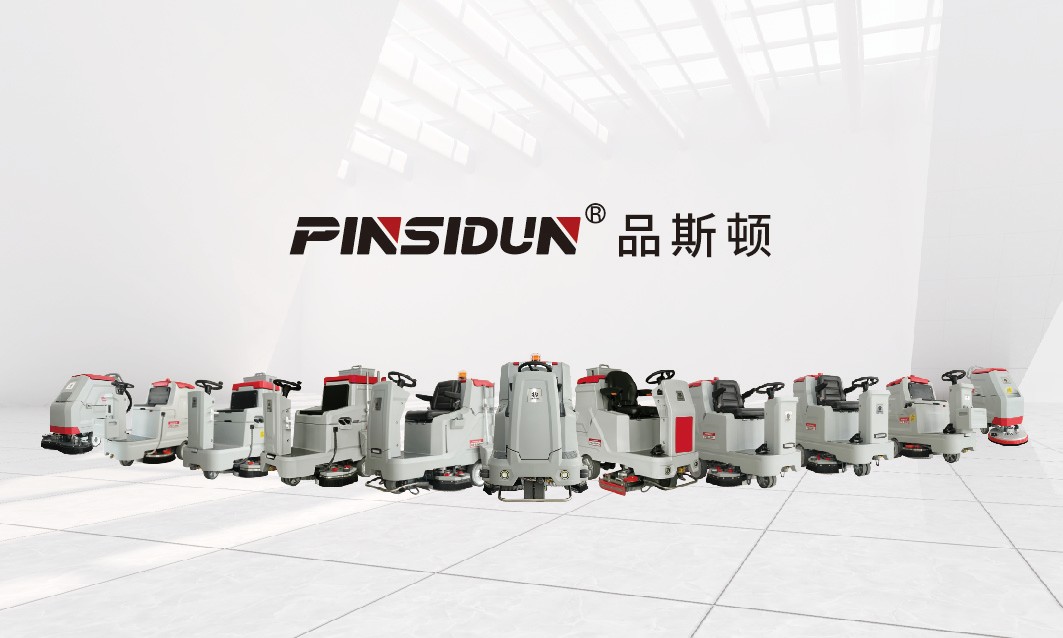
PINSIDUN specializes in the development and manufacturing of commercial and industrial floor cleaning equipment.
Our floor scrubber range includes compact walk-behind machines, self-propelled floor scrubbers, and ride-on floor scrubbers for different cleaning environments.
Our machines are designed for applications including:
Factories
Warehouses
Logistics centers
Supermarkets
Shopping malls
Hospitals
Schools
Parking facilities
Transportation facilities
For overseas distributors and cleaning equipment dealers, we also support OEM and private label cooperation based on project requirements.
Our goal is not simply to supply a machine. We aim to help our partners build a practical floor cleaning equipment portfolio supported by technical guidance and spare parts availability.
Looking for a Floor Scrubber Manufacturer in China?
Trusted by 1000+ Clients Quality Without Borders – Your Global Supply Partner
If you are currently sourcing commercial or industrial floor scrubbers from China, tell us about your market and the type of customers you serve.
Our team can recommend suitable models based on your cleaning area, floor type, required working efficiency, budget, and local market requirements.
Whether you are looking for walk-behind floor scrubbers, ride-on machines, or OEM/private label cooperation, you are welcome to contact us for more information.
Contact PINSIDUN to request our latest product catalog, specifications, and dealer quotation.